
Can a semi-automatic PCB recycling machine handle the same volume as a fully automatic line?
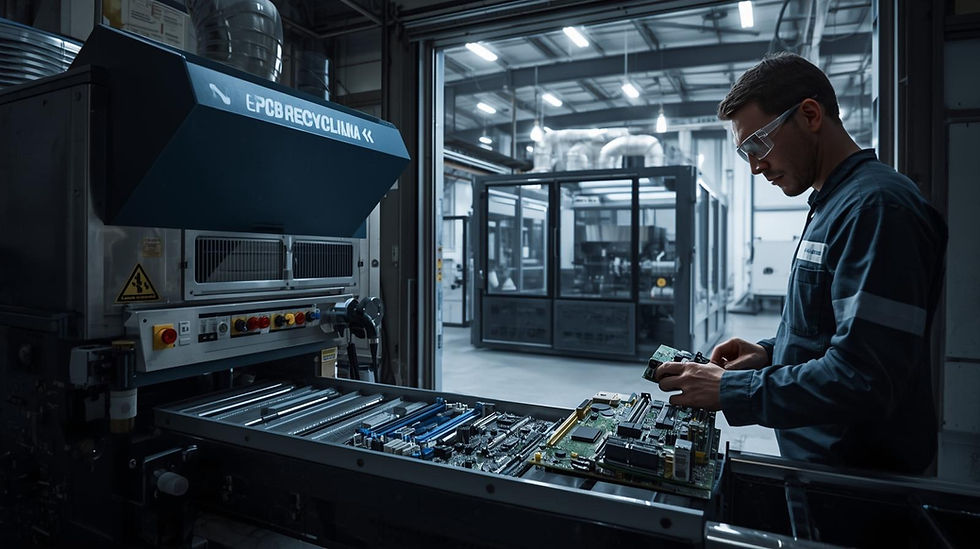
As the global push for a circular economy intensifies, the electronic waste (e-waste) recycling industry is seeing a surge in technological innovation. In 2026, the global PCB e-scrap recycling market is estimated at approximately USD 905.68 million, driven by an explosion in e-waste volume exceeding 59 million metric tons annually. At the heart of this industry lies the Printed Circuit Board (PCB) the "brain" of every electronic device, rich in precious metals like gold, silver, and copper.
To recover these materials, recyclers must choose between two primary paths: a semi-automatic PCB recycling machine or a fully automatic PCB recycling line. While both serve the same ultimate goal, a critical question remains: can a semi-automatic setup truly match the volume of a fully automated giant?
Theoretically, the answer is yes. Practically, it is a matter of scalability, labor costs, and long-term e-waste recycling cost efficiency.
2. What is a Semi-Automatic PCB Recycling Machine?
A semi-automatic machine serves as a critical "human-in-the-loop" system, bridging the gap between labor-intensive processes and high-cost fully automated lines. While the machine handles the potentially hazardous tasks, it relies on operators for tasks such as material feeding, initial sorting of large components, etc.
Capacity & Scaling: While theoretically capable of high hourly rates, Semi-automated PCB recycling machines are practically optimized for a capacity of up to 3,000 tons per year. Beyond this, the logistical challenge of manual interventions becomes a bottleneck. According to research from the RSC (Royal Society of Chemistry), semi-automatic setups are the preferred choice for facilities prioritizing the recovery of intact components for reuse, rather than just material crushing.
Environmental & Safety Features: Modern semi-automatic machines include integrated air pollution control (APC) systems. These systems use activated carbon filters, Dust filters and water-scrubbing systems to ensure air quality compliance. This makes them significantly safer than traditional manual methods used in the informal sector.
Key Advantages: Reduced Capex: They offer a lower barrier to entry for startups and mid-sized recyclers.
Operational Agility: They allow recyclers to quickly switch between different board types such as mobile phone PCBs, motherboards, and power strips without needing to recalibrate complex sensor arrays.
Learn More: Check out the ResposeIndia Semi-Automatic PCB Recycling Machines for specialized mid-sized solutions that balance high recovery rates with manageable operational costs.
3. Fully Automatic PCB Recycling Lines
A fully automatic line is a sophisticated end-to-end industrial ecosystem designed for maximum resource recovery with minimal human oversight. In 2026, as e-waste volumes surge, these lines have become the standard for "Urban Mining" operations that require high-purity output for the global metal commodities market.
Integrated Process Flow: The journey begins with automated feeding into a primary PCB shredder, which reduces the boards into manageable chunks. This is followed by a granulation mill that pulverizes the fragments into fine particles (often 0.1mm to 5mm). The system then employs a sequence of specialized separators:
Magnetic Separation: To pull out ferrous metals like iron and steel.
Air Classification: To separate light materials (plastics and resins) from heavier metal particles based on density.
High-Voltage Electrostatic Separation: This is the "final purge," using electrical conductivity to achieve up to 99.9% metal purity, effectively separating copper and precious metals from non-conductive resin powder.
Industrial Capacity: These systems are built for high-velocity throughput, handling anywhere from 3,000 to over 10,000 tons per year (equivalent to 500–1,000 kg per hour). High-capacity models, like the Rudra 10000, are engineered to run 24/7, making them essential for centralized recycling hubs that collect waste from across multiple regions.
Safety & Compliance: A key component of modern automatic lines is the Pulse Jet Dust Collector. Because crushing PCBs creates hazardous fine dust, these sealed systems use negative pressure to prevent atmospheric contamination, ensuring the facility meets strict environmental and labor safety standards.
Explore High-Volume Options: View the ResposeIndia Fully Automatic PCB Recycling Line to see how industrial-scale automation can maximize your recovery rates.
4. Comparing Semi-Automatic vs. Fully Automatic Machines
When weighing a semi-automatic vs. fully automatic machine, focusing only on the "per hour" material handling capacity can be deceptive. A high-end semi-automatic dismantling unit might claim a processing speed of 500 kg/hr, which matches the entry-level output of a fully automatic line. However, the operational reality changes drastically as you scale.
The Labor Wall
In a semi-automatic setup, increasing your capacity from 1,000 tons to 5,000 tons per year requires a linear increase in labor. You would need to manage a larger workforce for loading, monitoring, and secondary sorting. This reliance on manual intervention leads to:
Escalating Overheads: Higher payroll, increased insurance costs, and the need for more specialized dismantling workstations.
Compliance Risks: A higher probability of human error in sorting can lead to hazardous materials entering the wrong stream, potentially risking your E-Waste Refurbishing License.
Profitability at Scale
Research from the United Nations Environment Programme (UNEP) in their landmark report, Recycling – from E-Waste to Resources, highlights that while semi-automatic methods are excellent for pre-processing in developing economies, automation is the key to making urban mining profitable at a macro scale.
According to the latest Global E-waste Monitor 2024, billions of dollars in recoverable resources are lost annually due to inadequate infrastructure. A fully automatic line, such as the Rudra 3000A or 5000A, significantly reduces the "cost per ton" of processed waste. While the initial investment (CAPEX) is higher, the lower operational expenditure (OPEX) and superior purity of the recovered copper and gold lead to a much faster ROI in high-volume environments.
As the industry moves toward 2030, the transition from semi-automatic to fully automatic is no longer just an upgrade it's a competitive necessity for any recycler processing over 3,000 tons annually.
5. Ideal Use Cases
Choosing the right equipment isn't just about speed; it's about matching your machine to your business model. In 2026, the global e-waste recycling market is estimated at USD 21.79 Billion, and how you position yourself in this market depends on your processing strategy.
Semi-Automatic Machines:
The "Agile" Recycler
Mid-sized Recyclers: Perfect for facilities processing between 1,000 to 2,500 tons annually. These machines allow for the careful removal of intact components for refurbishment and reuse, a sector projected to be the fastest-growing category through 2032.
Pilot Projects: Ideal for startups testing "Urban Mining" in new regions or for research facilities focusing on rare-earth element recovery.
Variable Loads: If your input stream fluctuates ranging from mobile phone PCBs one week to server motherboards the next the "loosely coupled" design of semi-automatic machines provides the flexibility to adjust to the variations.
Fully Automatic Lines:
The "Industrial" Powerhouse
Centralized Recycling Hubs: The backbone for operations handling 3,000 to 10,000+ tons per year. These are necessary for businesses serving large municipalities or corporate contracts under large Extended Producer Responsibility (EPR) mandates.
Labor-Scarce Markets: In regions where labor costs are rising or specialized technicians are hard to find, a fully automatic system replaces a large workforce with a few skilled supervisors.
6. Cost, ROI, and Practical Considerations
The choice between these two systems depends on your long-term e-waste recycling cost efficiency.
Semi-Automatic: Offers a lower initial cost (CAPEX), making it easier for new businesses to enter the market. However, as volume grows, the labor cost per ton remains high.
Fully Automatic: Requires a higher upfront investment but provides a much better ROI at high volumes. The reduction in labor costs often allows the machine to pay for itself within a few years of operation.
Key considerations should include your current throughput needs, available floor space, and the local cost of labor. For more general e-waste information, you can visit Respose India.
7. Conclusion
The question isn't just whether a semi-automatic PCB dismantling machine can handle high volumes it’s whether it should.
Theoretically, with enough machines and operators, you could match the output of a giant. Practically, however, semi-automatic machines are most viable up to ~3,000 tons per year. Beyond this capacity, the complexities of labor management make them less efficient.
For large-scale operations, fully automatic lines are the only path to sustainable profitability. Choosing the right machine today is a strategic decision that affects your overall ROI for the next decade.
FAQ Section
Q1: Can a semi-automatic PCB recycling machine match a fully automatic line?
A1: Theoretically yes, as the material handling speed per hour can be similar. However, practically, it is only viable up to 3,000 tons/year due to the massive labor costs required to scale further.
Q2: What is the main difference between semi-automatic and fully automatic PCB recycling machines?
A2: Semi-automatic machines require manual interventions at a few points in the recycling process, while fully automatic lines are continuous systems that require minimal manual intervention.
Q3: Which setup is better for small to medium e-waste recycling plants?
A3: Semi-automatic machines are generally the best fit for small to medium plants because they are cost-effective and provide more flexibility for varying loads.
Q4: Are semi-automatic machines upgradeable to fully automatic? A4: Depending on the design of the system, some manufacturers can provide an upgrade path. In case of ResposeIndia, for example, the semi automated machines are upgradable to fully automatic. However, whether it is desirable to do so and at what capacity threshold remains a subject of intense deliberation.
Contact Details:
Respose India
Email Id: info@resposeindia.com
Phone: +91 9594 312 506


Recycling solutions are becoming more important than ever as communities look for practical ways to reduce waste and protect the environment. I really appreciate how modern recycling solutions go beyond just separating paper and plastic—they now include construction debris recycling, e-waste processing, metal recovery, and even organic waste composting.