
What Is CE Mark Certification, and Why Does It Matter for Machines?
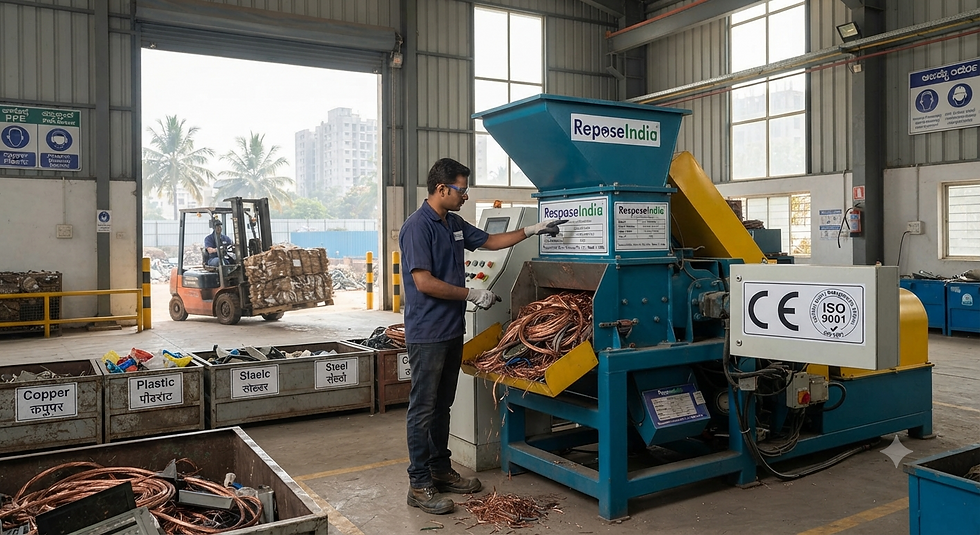
When you are evaluating a recycling machine, a shredder, a granulator, or any industrial equipment, one of the first things you will notice on a credible manufacturer's product page is the CE mark. It appears as a small logo, sometimes alongside ISO 9001, and most buyers assume it signals quality. That assumption is partially correct but incomplete. CE mark certification is specifically a product-level compliance declaration covering health, safety, and environmental standards set by the European Union. For a machine buyer, understanding exactly what it confirms, what it does not guarantee, and why it matters even outside Europe can make the difference between a safe, compliant investment and a costly mistake.
What CE Mark Certification Actually Is
CE mark certification, which stands for Conformité Européenne, is a regulatory standard that verifies certain products are safe for sale and use in the European Economic Area (EEA). When a manufacturer affixes the CE mark to a machine, they are declaring that the product meets all applicable EU health, safety, and environmental requirements under relevant European Directives.
For industrial machinery specifically, CE mark certification is governed by the Machinery Directive 2006/42/EC, which guarantees a basic level of health and safety for workers and consumers who use the equipment. By affixing the CE mark, the manufacturer confirms that the machine meets all the necessary health and safety requirements of this Directive.
Three things are important to understand upfront:
CE mark certification is product-level, not company-level. It applies to a specific machine or product line, not to the manufacturer's overall operations.
It is not issued by a central EU authority. No central EU body grants permission to use the CE mark. The manufacturer is responsible for performing the conformity assessment and affixing the mark, supported by a Declaration of Conformity document.
It is a mandatory legal requirement for selling machinery within the EEA. Approximately 70% of all products sold in the European Economic Area require a CE mark. Without it, a machine cannot legally enter the European market.
What a Manufacturer Must Do to CE Mark a Machine
Obtaining CE mark certification for industrial machinery is not a quick administrative task. The CE marking process for machinery requires manufacturers to identify all applicable EU directives, verify that the machine meets essential health and safety requirements (EHSRs), conduct a formal risk assessment, assemble a full technical file of compliance documentation, and sign an EU Declaration of Conformity.
The full process for machinery involves these steps:
Identifying the applicable EU Directives for the specific machine type
Conducting a risk assessment per ISO 12100 for machine safety
Designing and building the machine to meet all essential health and safety requirements
Assembling a technical dossier that documents every aspect of compliance
Issuing a legally binding EU Declaration of Conformity
Affixing the CE mark visibly, legibly, and permanently to the machine
For higher-risk machinery categories, the process also requires third-party assessment by a Notified Body, an independent organisation authorised by an EU country to evaluate product compliance. When a Notified Body is involved, their four-digit identification number must appear alongside the CE mark on the product.
The technical documentation and EU Declaration of Conformity must be kept for a minimum of 10 years after the product is placed on the market, creating a long-term accountability trail.
Why CE Mark Certification Matters for a Machine Buyer
1. It Confirms the Machine Was Designed With Worker Safety in Mind
The most direct benefit for a buyer is that a CE-marked machine has gone through a structured safety design process. The Machinery Directive requires manufacturers to account for planned use, foreseeable misuse, emergency stop systems, guarding, and operator instructions. CE mark certification helps assure regulators, buyers, and operators that a specific machine is safe for the operator and the public.
For recycling machines, which handle abrasive materials, sharp components, high-torque shredding, and sometimes hazardous substances like battery chemicals, this safety design framework is directly relevant to the daily risk profile of workers operating the equipment.
2. It Provides Legal Protection for the Buyer
If a CE-marked machine is involved in a workplace accident, the manufacturer is held accountable against the documented Declaration of Conformity and technical file. By ensuring compliance with EU regulations, CE mark certification helps manufacturers and buyers mitigate the risk of legal issues related to safety and quality, protecting them from potential liability claims. A buyer who purchases a non-CE-marked machine for use in a compliant facility carries significantly more legal exposure in the event of an incident.
3. It Signals That the Machine Can Be Exported and Operated Globally
Even for buyers in India or other non-EU markets, CE mark certification carries practical weight. Many multinational companies and institutions require CE-compliant equipment as a procurement standard regardless of geography. All machinery imported from non-EU countries also requires a CE mark to enter the European Economic Area, irrespective of the year of construction. If a buyer in India ever intends to export recycled materials or their processed output to European buyers, or to expand operations internationally, CE-certified equipment makes that transition cleaner.
4. It Demonstrates Engineering Discipline in the Design Process
A machine that has been through the CE mark certification process has been subjected to formal risk assessment, technical review, and documented safety engineering. This discipline in design tends to produce machines that are more reliably engineered overall. The CE mark is the symbol that proves a product meets a series of health, safety, and environmental protection standards, which for industrial buyers signals that the manufacturer took the design process seriously.
5. It Protects Against Substandard Equipment
One of the most common risks in industrial machinery procurement, especially in emerging markets, is buying equipment that looks professional but has not been designed or tested to any recognised standard. CE mark certification, when genuine, provides a documented baseline. Products without CE marking in markets that require it can result in detention at customs, fines, and legal consequences if involved in an accident.
CE Mark Certification vs. ISO 9001: Understanding the Difference
These two certifications are often seen together and are complementary, but they cover different things entirely.
CE mark certification is a product-level standard. It applies to the specific machine and confirms it was designed and built to meet EU health, safety, and environmental requirements at the time it was placed on the market.
ISO 9001 is a company-level quality management standard. It applies to the manufacturer's overall processes, covering how they design, build, test, support, and continuously improve their products.
CE without ISO leaves no system to catch production drift. A manufacturer can pass CE conformity assessment on a prototype, then allow quality to slip in production without any management system to detect and correct it. The strongest signal a buyer can receive is a manufacturer that holds both, because together they cover both product-level safety and company-level quality consistency.
ResposeIndia holds both ISO 9001 certification and CE mark compliance across its range of recycling machines. This means every machine is designed and built to meet both EU safety and performance standards at the product level, and the manufacturing process that produces them is governed by a documented quality management system audited by an independent certification body.
What to Watch Out For: CE Mark Misuse
Not every CE mark on a product is genuine. The European Commission acknowledges that CE markings are misused, with some manufacturers affixing the mark without performing the required conformity assessment. Buyers should always request:
A copy of the EU Declaration of Conformity for the specific machine model
The list of EU Directives the machine claims compliance with
The name and contact details of any Notified Body involved, if applicable
Supporting technical documentation confirming the risk assessment was completed
Note: Be aware of the "Chinese Export" mark, which looks very similar to the genuine CE mark. The key difference is the spacing between the "C" and "E". Always verify the supporting compliance documents, not just the logo.
CE Mark Certification in the Context of Recycling Machines
Recycling machines operate under demanding conditions. Shredders, granulators, magnetic separators, pulverisers, and battery processing equipment all involve moving parts at high torque, abrasive material flows, dust generation, and in some cases chemical or thermal hazards. CE mark certification ensures these machines have been designed with all of those operating realities evaluated through a structured safety engineering process.
ResposeIndia's full product range, including their e-waste recycling machines, battery recycling machines, tyre recycling solutions, PCB recycling machines, and plastic recycling equipment, all carry CE mark compliance alongside ISO 9001 certification. Buyers looking to set up a compliant, professionally run recycling facility can explore the full product range or reach out through consulting services to understand which machines best suit their setup.
FAQs
Q: Does CE mark certification mean a machine has been tested by an independent body?
Not always. For most machinery categories, CE marking is a manufacturer's self-declaration supported by their own conformity assessment and documentation. Only higher-risk machinery categories require third-party assessment by an accredited Notified Body. Buyers should ask which route was followed and request the Declaration of Conformity to verify.
Q: Is CE mark certification required for machines used in India?
CE mark certification is a legal requirement for selling machinery within the European Economic Area. It is not legally mandatory in India. However, it is widely recognised as a benchmark for safety and engineering quality by professional buyers globally, and many large organisations require it as a procurement standard regardless of geography.
Q: Can a CE-marked machine lose its certification?
The CE mark itself does not expire, but the EU Declaration of Conformity must be updated if the product is modified, if applicable legislation changes, or if the manufacturer's contact details change. If any of these occur without updating the DoC, the marking is no longer valid. Buyers should confirm the DoC is current and reflects the machine model being purchased.
Q: What is the EU Declaration of Conformity and why should a buyer ask for it?
The EU Declaration of Conformity is the legal document the manufacturer signs to confirm their machine meets all applicable EU Directives. It must list the directives the machine complies with, any applicable harmonised standards, and the identity of any Notified Body involved. It is the core document that makes a CE mark meaningful and any reputable manufacturer should be able to provide it immediately on request.
Q: Why do both CE mark certification and ISO 9001 matter together?
CE mark certification confirms the machine was designed safely. ISO 9001 confirms the manufacturer has the quality management systems to build every machine to that standard consistently. One without the other leaves a gap. CE without ISO means there is no system in place to ensure production quality stays consistent over time. ISO without CE means the company has good processes but the product-level safety engineering has not been formally assessed. Together, they give a buyer the most complete assurance available.
Connect with Respose India:
Website | LinkedIn | Facebook | YouTube | Google Maps / GMB
Email: info@resposeindia.com | Phone: +91 9594 312 506


For quick digital coloring, this browser-based coloring tool provides fill and brush options without downloads or sign-up. You can bring in your own line art, then export as PNG or print the finished page.
For those interested in seeing what independent contributors are writing today, visiting such a digital space offers plenty of reading material.
Achieving technical certifications like the CE mark requires clear documentation and precise communication of standards. Professionals who want to emphasize their expertise in technical compliance should consider a method for organizing professional credentials to provide easy access for potential clients. Presenting your qualifications in an orderly fashion builds immediate trust during the procurement process.