
How PCB Recycling Plants Recover Gold from ‘Worthless’ Circuit Boards
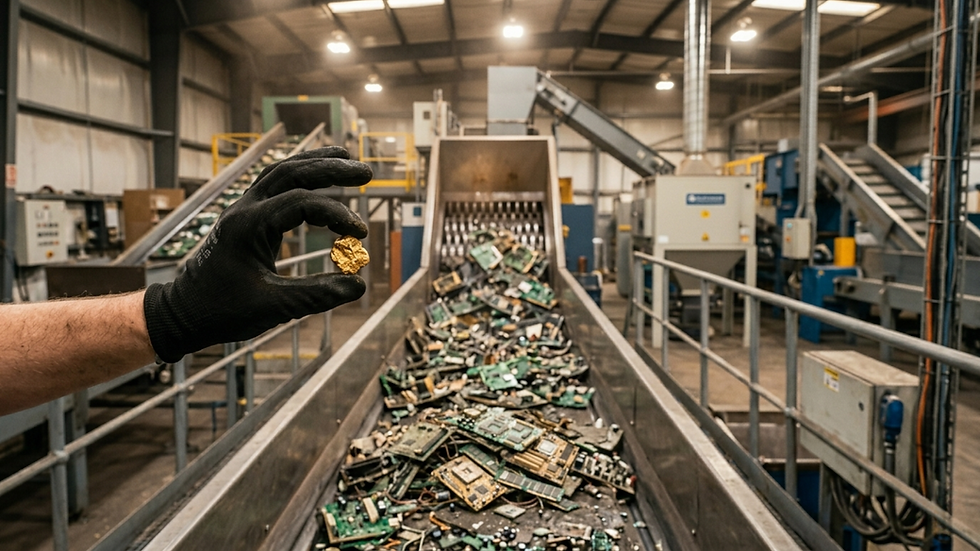
The digital revolution has a shimmering secret hidden within its discarded hardware. While most people see a pile of old motherboards as junk, PCB Recycling Plants view them as urban mines. These circuit boards contain concentrations of precious metals, including gold, silver, and copper, that are often significantly higher than those found in traditional ore extracted from the earth. As a leading e-waste machine manufacturer and supplier, we understand that the bridge between "worthless" scrap and pure gold is sophisticated engineering.
With the global surge in electronic consumption, the demand for efficient PCB Recycling Plants has never been higher. Transitioning from manual scavenging to automated recovery is no longer just an environmental choice; it is a massive economic opportunity. According to research from the Global E-waste Monitor, the total value of raw materials in global e-waste is estimated at over $60 billion annually, with gold being a primary driver of that valuation.
The "Urban Mining" Reality: Why PCBs are Gold Mines
Printed circuit boards (PCBs) are the most valuable component of e-waste. Gold is used in connectors, switch contacts, and connecting wires because of its high electrical conductivity and resistance to corrosion.
Concentration Advantage: Traditional gold mines often yield only 1–2 grams of gold per ton of ore. In contrast, one ton of circuit boards can yield anywhere up to 400 grams of gold, depending on the type of the board.
Economic Viability: With gold prices hitting record highs in 2026, the ROI on a PCB Recycling Plant has shortened significantly, making it a lucrative venture for waste management firms.
Sustainability: Recycling gold uses about 90% less energy than primary mining and prevents toxic heavy metals like lead and mercury from leaching into the soil from landfills.
Given the current geopolitics around materials and resources , securing domestic sources of these metals is becoming a matter of national security for many countries. By recovering these materials locally, nations can reduce their dependence on volatile international markets.
The Step-by-Step Recovery Process in PCB Recycling Plants
Recovering gold isn't as simple as dipping a board in acid. Modern PCB Recycling Plants utilize a multi-stage process to ensure maximum purity and minimal environmental impact. The journey from a discarded motherboard to a gold bead involves several critical phases.
1. Pre-processing and Dismantling
Before the chemical magic happens, the boards must be prepared. This involves removing large capacitors, batteries, and aluminum heat sinks that can interfere with the gold recovery process. Advanced PCB Recycling Plants often use automated sorting systems to identify high-value boards versus low-grade ones.
2. Component Desoldering
Our specialized machines can strip chips and connectors from the fiberglass base without damaging the precious metal plating. This "surface-mount" recovery is crucial because most of the gold is located in the pins and connectors of these components.
3. Physical Crushing and Milling
The goal here is "liberation" breaking the physical bond between the metals and the plastic/fiberglass. The process starts with primary shredding, reducing boards to 2-inch pieces, followed by fine pulverization. This creates a fine powder that maximizes the surface area for the subsequent separation stages.
4. Density, Electrostatic and Magnetic Separation
Once the material is powdered, PCB Recycling Plants use physical properties to sort the materials. Magnetic separation pulls out ferrous metals like iron and nickel. Afterward, density separators can separate metals from epoxy and fibre based on density difference within the particles. Alternatively, electrostatic separation uses high-voltage currents to separate conductive metals like copper and gold from non-conductive materials like resins and glass fibers.
5. Refining and Chemical Recovery
This is the final stage where the gold is actually "recovered." Many plants use hydrometallurgy, involving leaching agents like aqua regia to dissolve the gold into a liquid state, which is then precipitated back into solid, high-purity gold. This involves the use of various equipment like leaching tanks, filters, sedimentation tanks, reactors, furnaces and the supporting instrumentation.
Choosing the Right Infrastructure for Your Plant
As a premier manufacturer, we offer solutions tailored to the scale of your operations. The efficiency of your PCB Recycling Plant depends entirely on the machinery you deploy. For those starting in the industry or handling specific batches, a semi-automatic PCB recycling machine provides a balance of manual control and mechanical efficiency. It is designed for reliability and ease of maintenance.
However, for industrial-scale operations where volume is the priority, a fully automatic PCB recycling machine is best. These systems feature integrated conveyors minimizing human intervention. By automating the process, you reduce labor costs and ensure a consistent output of high-purity metal concentrates.
The Indian Market Context in 2026
The landscape for e-waste in India is shifting rapidly. We are currently seeing a massive e-waste recycling plants shortage in India 2026, creating an "early-mover" advantage for entrepreneurs entering the space now. The gap between the amount of waste generated and the capacity to process it professionally is widening every month.
Currently, the recycling plants demand in India is concentrated in a few states like Maharashtra, Karnataka, and Uttar Pradesh. These IT hubs generate the bulk of the nation's discarded electronics, yet much of it still ends up in the informal sector.
The Regulatory Push: The E-Waste Management Rules (2022/2024 updates) now require producers to meet stringent recycling targets through Extended Producer Responsibility (EPR).
Informal vs. Formal: Professional PCB Recycling Plants recover up to 98% of available metals, whereas informal "backyard" acid baths often recover significantly less and cause irreparable environmental damage.
Technological Gap: There is a dire need for indigenous, high-efficiency machinery that can handle the complexity of modern multi-layer boards found in smartphones and high-end servers.
Environmental Impact and Safety
When PCB Recycling Plants operate correctly, they represent the pinnacle of the Circular Economy. However, gold recovery involves handling complex materials that must be managed with care to protect both workers and the planet.
Professional plants utilize high-end dust collection and gas purification systems. These systems ensure that lead dust and harmful dioxins often released during the heating of resins do not enter the atmosphere. Furthermore, modern hydrometallurgical systems often use closed-loop water circuits, recycling chemical strippers, ETPs and ZLD plants to minimize hazardous effluents. This commitment to safety is what sets a professional PCB Recycling Plant apart from illegal smelting operations.
How to Start Your Gold Recovery Business
As your partner in e-waste solutions, we don't just supply machines; we provide the blueprint for a profitable, sustainable business. Starting a PCB Recycling Plant requires a strategic approach:
Feedstock Sourcing: Establish contracts with IT companies, repair centers, government collection points, etc., to ensure a steady flow of high-grade PCBs.
Technology Selection: Evaluate your projected volume to decide between semi-automatic or fully automatic systems.
Compliance: Ensure your facility meets all Central Pollution Control Board (CPCB) norms and hazardous waste management protocols.
Refining Partnerships: Determine if you will refine the gold to bullion on-site or sell the high-value metal powder to specialized precious metal refineries.
The "worthless" circuit board is only worthless to those without the tools to unlock its value. By investing in professional PCB Recycling Plants, you are positioning yourself at the intersection of environmental stewardship and high-yield commodity production. The gold is there, and the technology is ready.
Frequently Asked Questions (FAQ)
1. How much gold can actually be recovered from one ton of PCBs?
The yield depends entirely on the grade of the boards processed in your PCB Recycling Plant. Low-grade boards (like those from CRT monitors or printers) may only yield a few grams per ton. However, high-grade motherboards, RAM modules, and server boards can yield between 150 to 400 grams of gold per ton. According to data from global metal recovery benchmarks, the average concentration in mixed e-waste is often 20 to 50 times higher (or more) than in natural gold ore.
2. Is a license required to operate a PCB Recycling Plant in India?
Yes. To operate legally, you must obtain authorization from the Central Pollution Control Board (CPCB) and comply with the E-Waste Management Rules. This is particularly important given the current e-waste recycling plants shortage in India 2026. Operating without a license is illegal and prevents you from participating in the lucrative Extended Producer Responsibility (EPR) certificate market.
3. What is the difference between a semi-automatic and a fully automatic system?
The choice depends on your budget and volume. A semi-automatic PCB recycling machine is ideal for smaller facilities where manual sorting and feeding are manageable. In contrast, a fully automatic PCB recycling machine is a "hands-off" solution with integrated crushers, dust collectors, and metal separators that can process several tons of waste per day with minimal labor.
4. Where is the demand for these plants highest right now?
The recycling plants demand in India is concentrated in top states like Maharashtra, Tamil Nadu, Karnataka, and Uttar Pradesh. These regions are the primary hubs for IT, telecommunications, and manufacturing, ensuring a steady supply of high-value "feedstock" (raw e-waste) for your plant.
Also Read Our Blogs
Contact Details:
Respose India
Email Id: info@resposeindia.com
Phone: +91 9594 312 506


The way you explained the key concepts made the topic much easier to understand without oversimplifying it. I especially liked the practical perspective because it shows how these ideas can be applied beyond theory. Staying informed about developments in tech is becoming more important every day, and articles like this help readers keep up. While browsing different online resources, I’ve noticed that even platforms such as European escort directory rely on modern technology to improve user experiences. Thanks for sharing such a clear, informative, and genuinely interesting article.
It is truly fascinating how "worthless" tech transforms into treasure! Reading about the intricate processes used to recover gold from old electronics really highlights the hidden value in our discarded devices. As someone who works with SMT PCB assembly, I often think about the components going onto the boards, but I rarely stop to consider their end-of-life journey. Seeing how recycling plants reclaim these precious metals is eye-opening and definitely highlights the importance of circular design. It’s impressive to see technology bridging the gap between high-end manufacturing and sustainable material recovery. Thanks for sharing such an insightful look into this industry!